
Why Over-explaining Weakens Communication
- Darren Shaw

- May 23
- 2 min read
Most people assume communication becomes stronger when more information is added.
Often, the opposite is true.
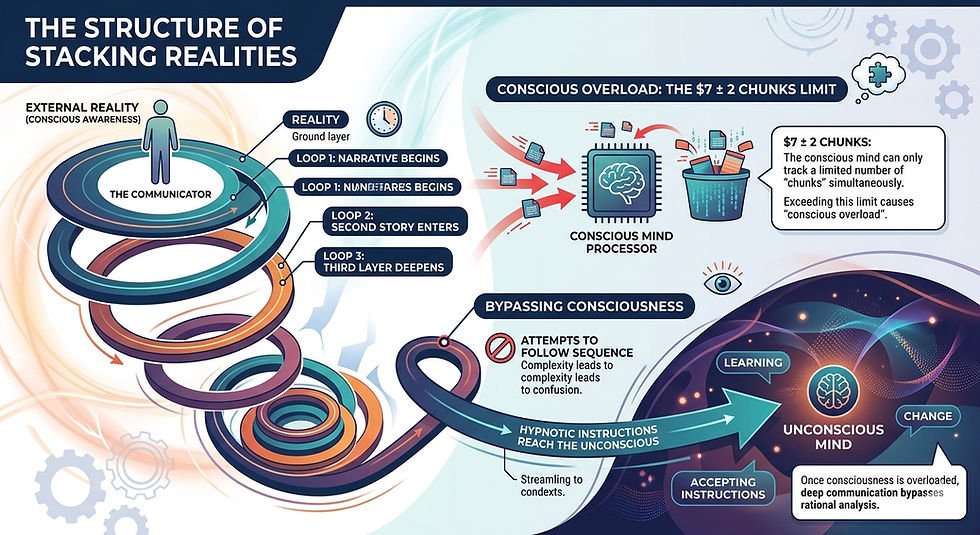
The more unnecessary detail you place into someone’s mind, the greater the cognitive load you create. Every extra explanation, side point, qualification, or tangent competes for attention inside the listener’s working memory.
And working memory is limited.
The brain must constantly decide:
what matters
what can be ignored
where attention should go
and whether the information is even relevant
As cognitive load increases, mental processing becomes less efficient. The listener now has to work harder simply to track the structure of the conversation.
Eventually, attention begins fragmenting.
This is one reason people mentally “switch off” during conversations. Not necessarily because they are rude or unintelligent, but because the communication itself has become cognitively expensive to follow.
Human beings do not usually want maximum information.
They want useful information.
People naturally filter for relevance using their own heuristics:
“Does this matter to me?”
“Will this help me?”
“Is this worth my attention?”
Strong communicators understand this.
Instead of overwhelming people with detail immediately, they begin with large chunks of meaning directly connected to the listener’s needs.
For example, if teaching someone how to use ChatGPT effectively, a weak communicator might begin with technical explanations about AI systems and language models.
A stronger communicator would begin with:
“Most people get weak ChatGPT results because their prompts are vague. Better prompts create better answers.”
Simple.
Relevant.
Easy to process.
Only after relevance is established should deeper explanation follow.
Direction before detail.
Because once the brain recognises relevance, attention becomes cooperative instead of resistant.
Communication is not just the transfer of information.
It is the management of attention.

Comments