The Architecture of Overwhelm: How the $7 \pm 2$ Rule is Sabotaging Your Boundaries
- Darren Shaw

- 9 hours ago
- 1 min read

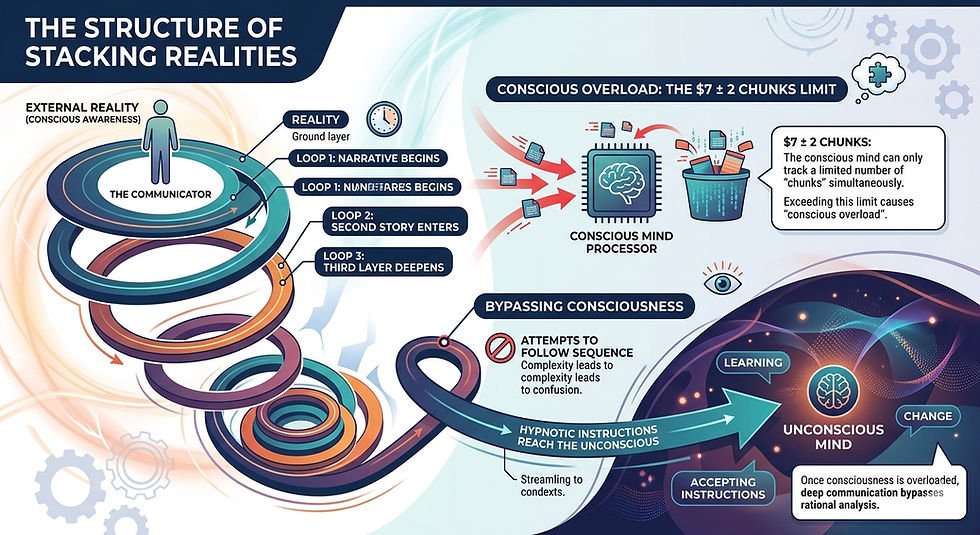
Overwhelm often feels like a giant wave, but in reality, it is a structural failure of mental bandwidth. Cognitive psychology tells us that the average human mind can only hold about seven (plus or minus two) chunks of information in its conscious awareness at any given time.
When you try to process relationship drama, tax deadlines, work projects, and daily chores all at once, you hit a "neurological ceiling." Your conscious mind collapses under the weight. This is where overwhelm lives—not in the tasks themselves, but in the lack of space between them.
Setting boundaries isn't just a social skill; it’s an architectural necessity for your brain. When you say "no" or delegate a task, you aren't just saving time—you are protecting the specific neurological space required for focus and creativity. By limiting the "chunks" you deal with, you allow your brain to function at its highest level.
Is your mental bandwidth at its limit? Learn the language patterns that help you set effortless boundaries and reclaim your focus in our next training session.
Comments